
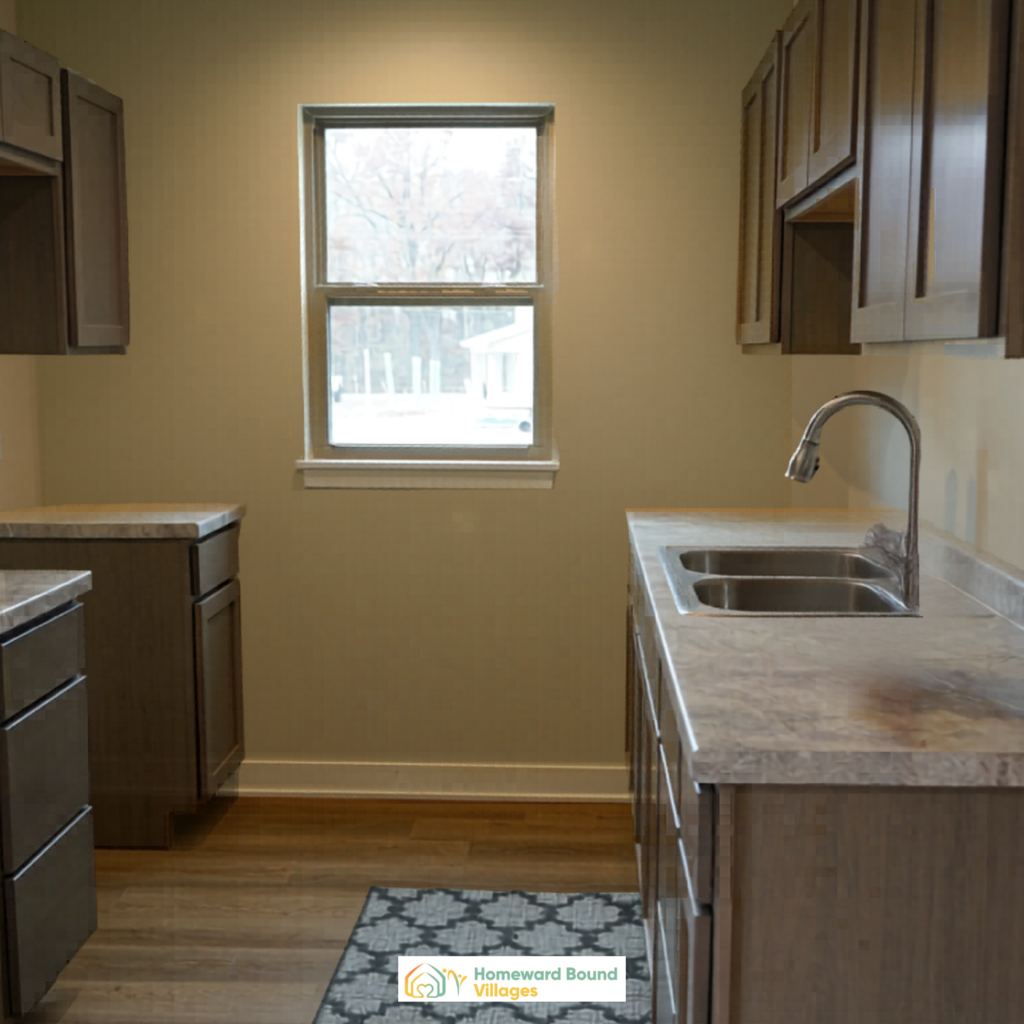
For decades, the American ethos for most has been that bigger is always better, and this is especially true when it comes to housing. Just consider the dramatic rise in the average square footage of most American homes. In 1950, the average home was roughly 983 square feet, compared to 2026, which topped out at a whopping 2400 square feet. This isn’t due to an increased need for large homes for big families, since we know that, on average, family size is decreasing in the US. So, where does this myth that affordable housing is small and therefore, less, come from?
This month, we’re breaking the myths, and today, we are focusing on the idea that affordable housing does not automatically mean smaller homes, lower-quality construction, and a diminished quality of life. The evidence says something very different.
Modern Affordable Housing Is Built to the Same Standards
Whether housing is classified as affordable or built to be affordable, it is subject to the same local and state building codes as market-rate housing. There is no separate standard for low-income developments.
The U.S. Department of Health and Human Services, through Healthy People 2030, notes that local building codes and state statutes require landlords across all housing types to meet basic standards, including adequate hot water, reliable heat, and smoke and carbon monoxide detectors. Federal programs, such as the Housing Choice Voucher program, go further by requiring landlords to meet housing quality standards before participating.
The American Institute of Architects and HUD jointly recognize excellence in affordable housing design each year through their Housing and Community Design Awards, a program that demonstrates that design matters and sets benchmarks for the entire housing industry.
Today’s Affordable Housing Is Increasingly Green, Efficient, and Well-Designed
Today’s affordable housing developments aren’t just code-compliant; many exceed market-rate standards in sustainability and design quality.
A great example of this in action is Via Verde in the South Bronx, a 222-unit affordable housing complex that achieved LEED Gold certification and exceeded both New York State’s energy-efficiency program requirements and Enterprise Green Communities’ environmental guidelines. Or the Anne M. Lynch Homes at Old Colony in South Boston, which includes 116 LEED Platinum-certified affordable units and 55 Passive House-certified units for seniors and people with disabilities.
According to Building Design + Construction’s reporting on top trends in affordable housing, amenities that were once considered market-rate, including rooftop spaces, courtyards, outdoor recreation areas, and flexible community rooms, are now increasingly standard in affordable developments. Architects are designing these spaces with intention, using trauma-informed design principles, biophilic elements, and flexible layouts built around how residents live.
Stable, Affordable Housing Directly Improves Quality of Life
The myth frames affordable housing as a step down. Research consistently shows the opposite. Stable, affordable housing is a step up, especially for families who were previously housing-insecure, overcrowded, or living in substandard conditions.
The connection between affordable housing and better health outcomes is well-documented. A study by the Center for Outcomes Research and Education, cited in Stearns Bank’s housing and health research roundup, found that low-income households who moved into more affordable and stable housing had 20% more primary care visits and 18% fewer emergency department visits.
A Health Affairs literature review confirmed the pattern on a larger scale. In a study of nearly 10,000 people in Oregon with unstable housing, the provision of affordable housing decreased Medicaid expenditures by 12%.
The National Center for Housing Policy’s research summary on affordable housing and health explains why: substandard housing, including mold, pests, lead-based paint, and overcrowding, drives poor health outcomes. When families move from those conditions into quality, affordable housing, health improves directly.
The benefits extend beyond physical health. Children in stable housing experience fewer mental health problems and developmental delays. Research also links residential stability to better educational outcomes and stronger childhood development, advantages that compound over time.
What About Size? Let’s Be Honest.
Smaller doesn’t mean poor quality. Architects and developers are increasingly focused on designs that make space work well, with smart layouts, shared amenity spaces, and community-centered design that makes a well-designed, smaller unit feel far more livable than a larger, poorly planned one.
A real-life example of this is Karwick Villages, our units were built intentionally smaller to be more economically viable, and eco-friendlier. Designed for one or two-person households, the unit design was optimized for a comfortable layout that feels both roomy and functional. All the units at Karwick Village also extend beyond the front door, creating community and shared spaces. Each unit has a generous front porch that faces a community greenspace; this was not by accident; it was intentional.
Myth-Busted: Affordable Housing Can be Amazing
The myth that affordable housing means smaller, lower-quality homes and a diminished quality of life is rooted in outdated imagery and policy, not in today’s reality.
Modern affordable housing is built to the same codes and standards as market-rate housing. It is increasingly recognized for its excellent, award-winning design. It is linked to measurably better health outcomes for residents. For the families it serves, it is a genuine improvement over the substandard conditions it replaces.
Quality of life isn’t determined by the price tag on your door. It’s built on safety, stability, health, and community, all of which good, affordable housing, done right, makes possible.
If you’d like to read more articles from this series, click the links below:
Myth #1: Affordable Housing Means Low-Quality Housing
Myth: Affordable Housing Is the Same as Public Housing
Myth #3: Affordable Housing Brings Down Property Values
Sources
- Quality of Housing, Healthy People 2030, U.S. ODPHP
- AIA/HUD Housing and Community Design Awards, HUD User
- Top 10 Trends in Affordable Housing, Building Design + Construction
- 10 Innovative Affordable Housing Designs, Architizer
- Housing and Health: An Overview of the Literature, Health Affairs
- The Intersection of Affordable Housing and Health, Stearns Bank
- The Positive Impacts of Affordable Housing on Health: A Research Summary, National Center for Housing Policy
- Low-Income Housing Tax Credit Details & Analysis, Tax Foundation (source for the Harvard 2019 cost-burden statistic)