A conversation about community, stability, and what it takes to make resident-led housing last
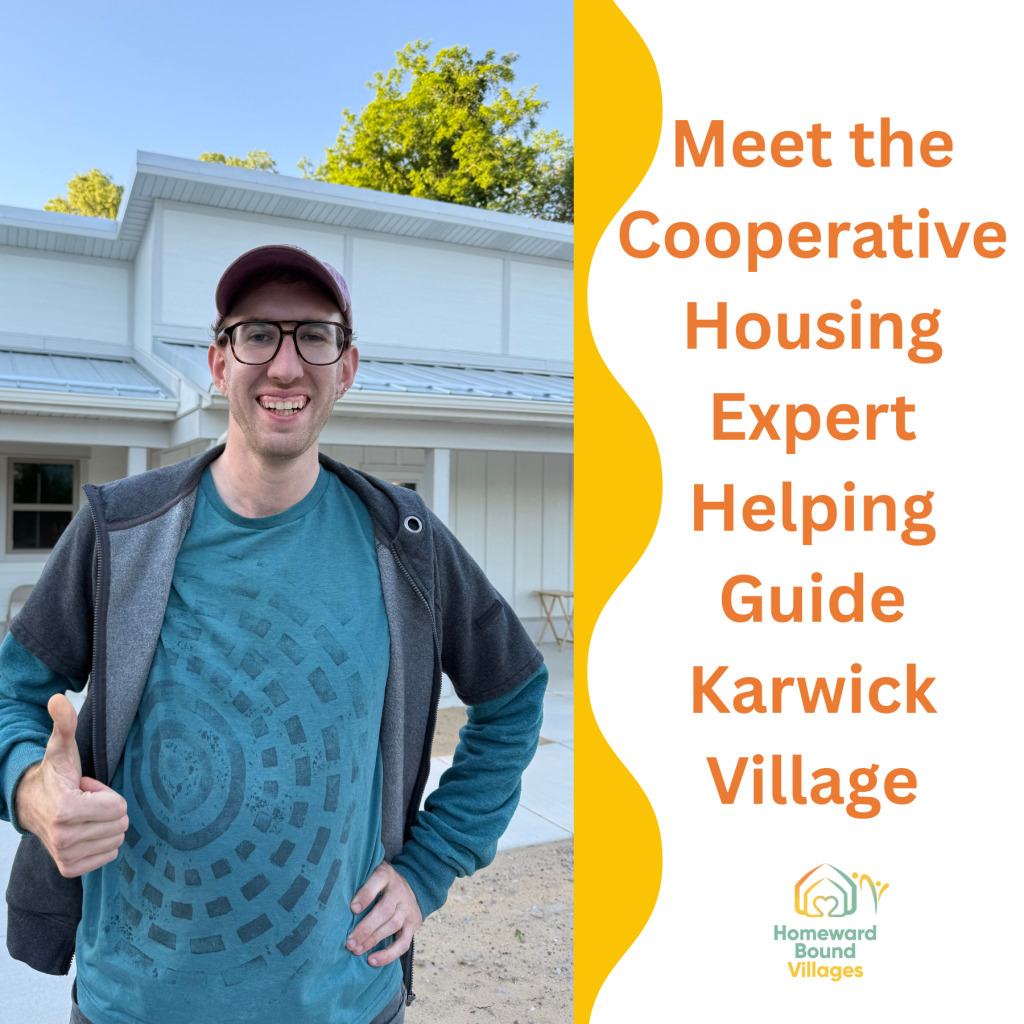
Karwick Village is something new for LaPorte County. As Homeward Bound Villages’ first cooperative housing community takes shape, we want to introduce the person who is helping to guide its residents through those critical early days. Peter has spent most of his adult life living in cooperative housing and serves on the board of NASCO Properties, a national organization dedicated to keeping housing cooperatively owned. We sat down with him to talk about his background, why the Rust Belt is ripe for cooperative living, and what comes next for Karwick Village.
How did you first get into cooperative living?
“It started in college, one of my professors talked about living in housing co-ops during grad school, and the idea stuck with me. A couple of years later, as I was moving to Chicago and weighing housing options, I looked for co-ops and found one. I’ve been living in a cooperative community ever since. It’s been a part of my life in one form or another for most of my adult years.”
For readers who are new to this, can you explain how cooperative housing stays cooperative over the long term?
“This is where an organization like NASCO comes in. NASCO stands for North American Students of Cooperation. It’s a consultative organization that supports cooperatively minded people, runs an annual conference, and offers education and training resources. NASCO also has a property-holding arm, NASCO Properties, whose mission is to keep as much housing as possible in cooperative ownership.
Here’s the problem it solves. Co-ops often hit rocky periods, usually driven by conflict or turnover, and a house operating entirely on its own can spiral. Missed mortgage payments, missed utility payments, members leaving, and eventually, the property is pulled out of cooperative ownership and back onto the speculative real estate market. NASCO Properties steps in to stabilize houses before that happens. Because it holds a portfolio of properties across multiple co-op systems, it can use the stability of its stronger houses to carry one that’s struggling through a hard stretch, rather than selling it off.”
How did you come to work with Homeward Bound Villages?
“Through Hugh in the Bloomington area, who is now the director of the Indiana Cooperative Development Center. Hugh and I have known each other for years through shared cooperative and political work. Sandi also had some connection with Hugh through cooperative and land trust circles, then asked him if he knew anyone nearby who could help with this project. Hugh connected us. I told Sandi up front that I’m not the most experienced cooperative developer in the world, but I may well be the best-positioned person within a 60-mile radius to take this on right now.”
What is it about this project that appealed to you?
“I’m from Northern Indiana originally, and I think this area is ripe for more cooperative housing. Chicago is full of co-ops, more than I can count, but somehow that hasn’t spread to the Michiana region, to Michigan City, South Bend, Gary, or Hammond. There’s something about Rust Belt cities that makes them especially well-suited to cooperative housing. Property is still affordable enough to buy older, larger homes; the areas were once well-developed, and it hits a kind of sweet spot. On top of that, this project keeps housing off the speculative market and creates genuinely affordable homes, which is deeply values-aligned for me.”
What does your work at Karwick Village actually involve?
“One of the biggest challenges in cooperative housing is that co-ops tend to see heavy turnover in their first five years, and that churn drives both social and financial instability. Many co-ops don’t make it through that window. Karwick Village is a project we really don’t want to lose. It’s innovative, it’s in a part of LaPorte County that needs housing, and the more we can shore up that rocky start-up cycle, the better. So my job is largely to watch for the friction points that commonly show up in young co-ops, including interpersonal conflicts and differing visions, and to help the community develop constructive ways to work through them before they become bigger problems. The goal is to give Karwick Village the best possible chance at long-term success and to keep it as resident-controlled as possible.”
Karwick Village is structured a little differently from many co-ops you’ve worked with. How so?
“It is. In a lot of the housing I’ve been part of, the co-op handles its own books, finances, and ownership, and members cook together and share a single house. (group equity co-op). Karwick Village is different on both counts. Everyone has their own unit, so residents aren’t managing the logistics of cooking for one another, which makes daily life noticeably easier. And because Homeward Bound Villages provides so much support, including handling the books, residents are freed from a lot of administrative burden. The trade-off is that this comes with somewhat less autonomy. Homeward Bound Villages retains a lot of the final say, though always in conversation with residents about how much control they want over their own finances and operations over time.”
Right now, Karwick Village has its first six units filled, with another six coming. What happens when a young co-op essentially doubles in size?
“It’s genuinely complex, and predictable tensions tend to surface. The residents who’ve been there longer may start to feel like they’re holding everything together because the newer folks don’t yet have the institutional knowledge. Meanwhile, the newer residents may feel they have no real voice because the established members keep saying, “This is how it’s done.” My own co-op turned over about a third of its membership in a single year, so I’ve lived this firsthand.
There’s a lot you can do to smooth it over. A big part is being explicit about the community’s norms and procedures so that new members know what to expect when they arrive. You can’t freeze a co-op in place and tell people nothing can ever change, but clarity and predictability go a long way toward reducing friction. The other piece is continually reintegrating new members into decision-making, ensuring they have advocates among the longer-tenured residents, and providing constructive channels for conflicts so they don’t become flashpoints. Honestly, the biggest factor is simply social. People need time to get to know one another and feel connected. Much of the work is just bridging that gap until everyone feels like, okay, we know each other now.”
Where is Karwick Village in its journey today?
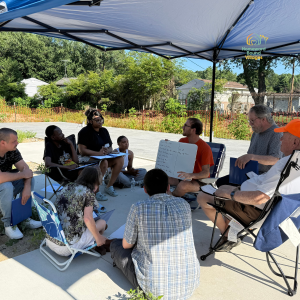
“Very much at the beginning. Residents started moving in around January, with maybe a couple arriving in late December, so we are just reaching the six-month mark. The construction work on the community building is still ongoing, and that physical space is a huge part of the project. But the social side, the part where it actually becomes a co-op, is just getting started. We’re holding our first all-resident co-op meeting on site, which I’m both nervous and excited about. There was an earlier meeting in February, but that was before everyone had moved in, so it was more of a get-to-know-you. Now that people have actually been living there and experiencing the space, I’m eager to talk with them about what they want for it.”
How big a shift will the community building be once it’s complete?
“I think it’ll be a major one. Having shared facilities on site changes everything. A place to post public notices, check in on what’s going on, put up sign-up sheets, host a game night, somewhere people can simply hang out together. Those shared spaces are where a lot of the community actually forms.”
Is there anything you want people to understand about your involvement?
“Mostly, it’s still developing. I’ve come up with plenty of ideas about what to watch for, and I’ve been in regular contact with Sandi, Lisa, and Molly, plus check-in calls with residents every couple of weeks. But that’s very different from being there in person and hearing directly what residents want for their community. Until I do, I don’t want to overstate my role. I have good ideas, but I expect them to change a lot once the residents tell me what they’re excited about. Nothing’s set in stone yet, and that’s exactly how it should be at this stage.”
Any final thoughts?
“One thing I’d add is about perception. People come through my co-op in Chicago, see that we have something like a sauna in the basement, and say, “Wait, I thought you were all just a bunch of hippies.” There’s a real stigma around both affordable and cooperative housing, and it’s misplaced. This housing can be beautiful. It should be every bit as beautiful as a single-family home. That’s part of what Karwick Village can show this community: housing can be built with purpose, built sustainably, and built cooperatively, and cooperatives come in all shapes and sizes. I want Karwick Village to be the place people walk into and think, this is really lovely.”