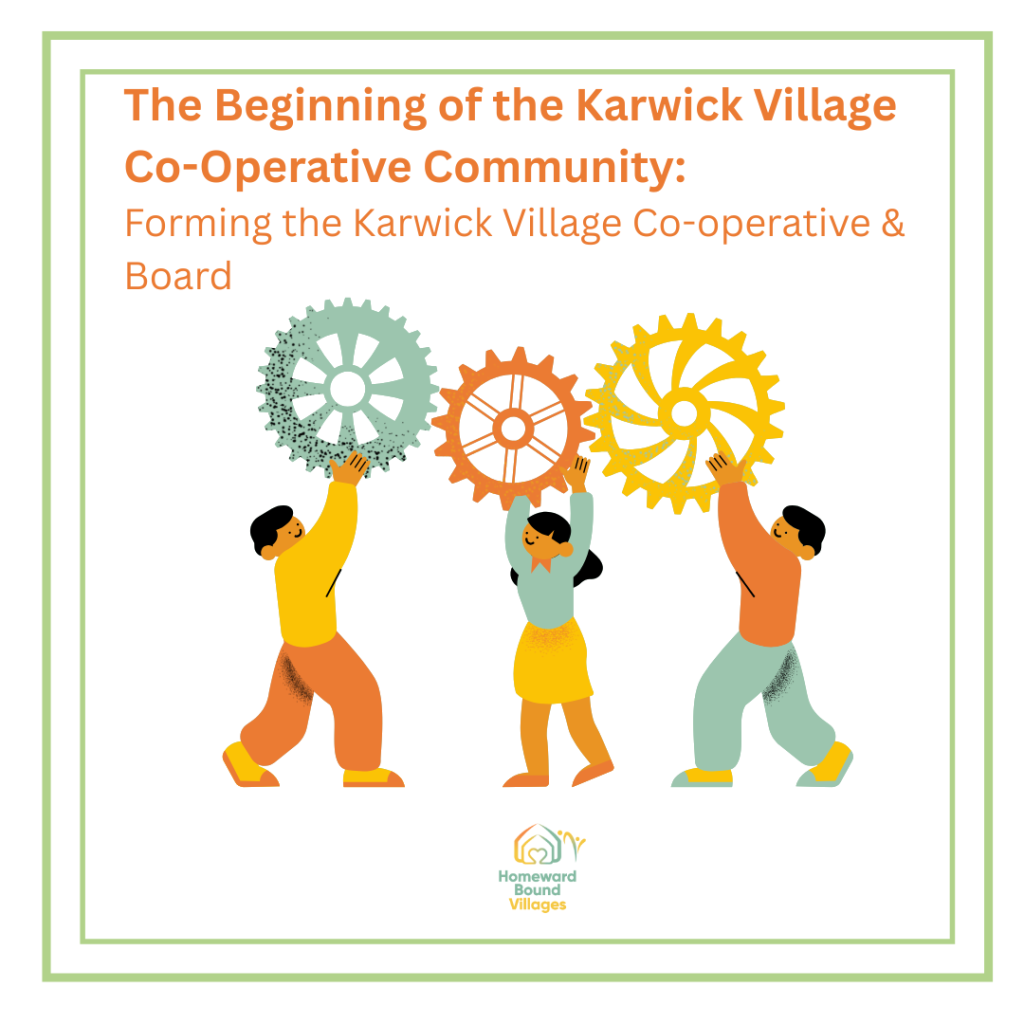
With construction now underway and our team working with the Notre Dame Community Development Law Clinic this past spring, we have the beginning of what will become the Karwick Village Co-op board established. In today’s blog post, we want to explain what this founding looks like, how it works, and why we are taking this approach for Karwick Village.
The Foundation Is Set
Working with Notre Dame law student Kyle Johnson at the Notre Dame Community Development Law Clinic in the spring, we established the legal framework for our Karwick Village Co-op. This critical work established our legal structure as a corporate entity, creating the framework to support resident-led decision-making for years. This important step ensures we have the proper governance structure to operate effectively while maintaining our mission of creating community through affordable housing.
Creating a Path to Resident Leadership
To bridge the gap between initial formation and full resident governance, we’re implementing a thoughtful transition strategy:
Working Group: The First Step
We’re forming a dedicated working group of five to six individuals who will lay the groundwork for governance. The working group will be instrumental in establishing processes, drafting initial policies, and creating the framework for resident participation.
Year One Board: Building Capacity
From this working group, we’ll expand with all appointed members serving for one year as an interim governance body. At the same time, we complete the necessary structures for the official Karwick Village Co-op board formation, and residents of Karwick Village will remain on the board. This collaborative effort ensures a smooth transition to resident governance. The Year One Board will develop leadership skills, governance protocols, and community engagement strategies that set the stage for long-term success. The biggest priority of this group will be to establish an effectively running organization, which will include selecting members who will be additional residents and mentoring them to take over their day-to-day operation and decision-making.
Resident-Led Governance: The Ultimate Goal
As residents move into our co-op housing, they will gradually replace the first-year board members, creating a truly resident-led governance structure. This transition isn’t just symbolic; it represents our core belief that community members should lead their community.
Power to the Residents
The heart of our cooperative model is the belief that residents will directly influence decisions that impact their daily lives. Once our housing development welcomes its first residents, the governance will gradually transition to a full resident board.
This resident board will have decision-making authority over:
- Management of shared green spaces and gardens
- Planning and coordination of community events and celebrations
- Development of educational programs and classes
- Creation of community guidelines and shared agreements
- Allocation of resources for common areas
- Long-term planning for community needs
Why Resident Governance Matters
Research consistently shows that when residents have meaningful input into their housing communities, several powerful outcomes emerge:
- Stronger sense of pride in the community
- Higher rates of resident satisfaction and retention
- More innovative solutions to community challenges
- Deeper connections between neighbors
- Greater financial stability through collaborative problem-solving
Affordable housing isn’t just about providing shelter; it’s about creating the conditions for community members to thrive together. Our cooperative governance model represents our commitment to building housing and a genuinely democratic community where everyone has a voice.