The affordable housing crisis gets a lot of attention these days, as many seek the American dream of homeownership but find themselves locked out of the market due to affordability. Many blame the economy, interest rates, or lack of housing stock. But there’s a quieter culprit hiding in plain sight: zoning code, and it impacts just about every level of the housing market.
Zoning laws are the rules that govern what can be built where. Communities across the country use this zoning code to create cohesive, orderly communities; many of these rules are decades, sometimes a century, out of date. Understanding how they work and how they’ve affected homeowners and renters is essential to understanding the role these rulebooks play in the affordable housing crisis.
What Is Zoning?
We’ve talked a lot about zoning code on our blog, but if you’re new to this conversation or have not had the opportunity to take a deep dive into what a zoning code is, we’re going to break it down here.
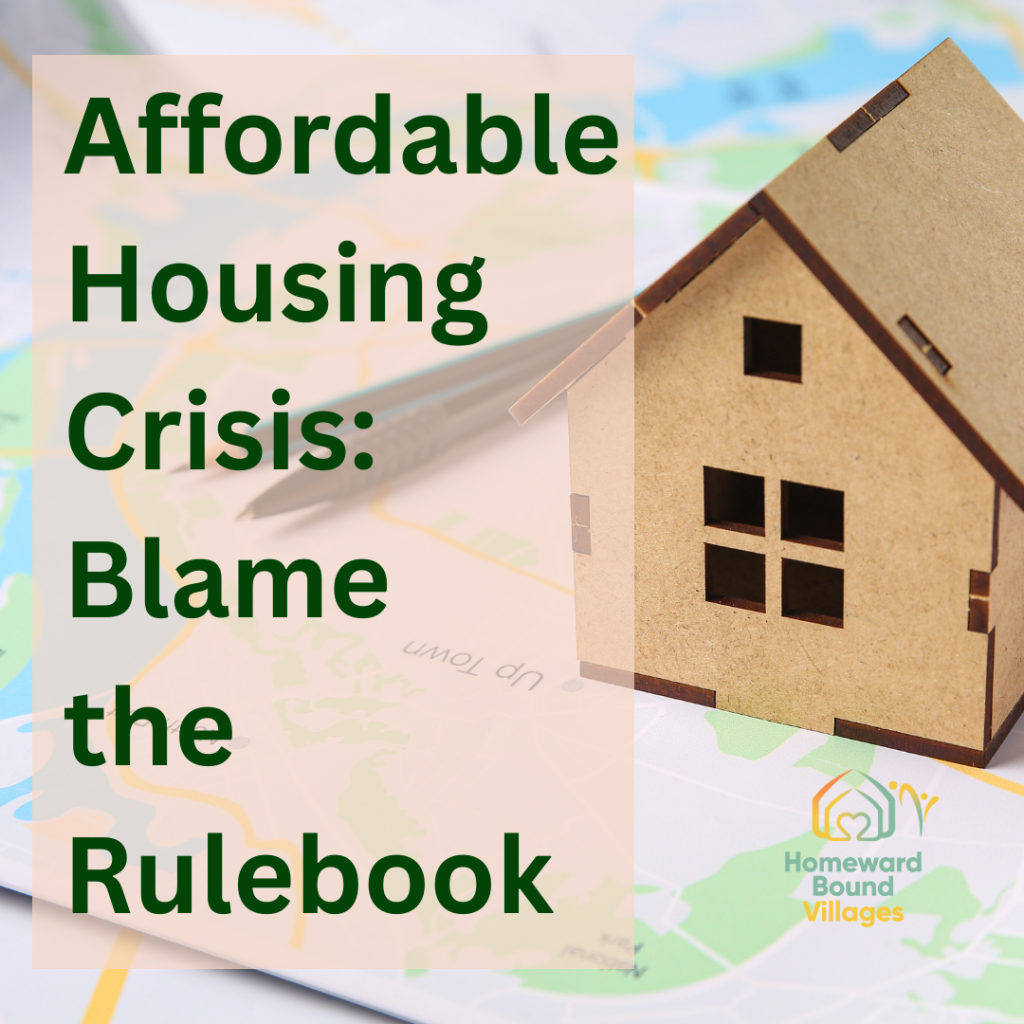
Think of zoning like a rulebook of what can be built where in your community. It divides land into districts and tells everyone what can be built there: a house here, a store there, a factory somewhere else. The idea was to keep industrial pollution away from neighborhoods and give communities some control over how they grow.
The most common type, called “Euclidean Zoning,” has been the law of the land since a 1926 Supreme Court case (Village of Euclid v. Ambler Realty Co.) established that local governments could legally regulate land use. The core concept: one type of land use per zone.
That sounds reasonable. But here’s the problem: many of those zoning codes from the 1920s, 1940s, and 1960s are still on the books today, essentially unchanged. The world has changed dramatically, but the rulebook hasn’t kept up.
The Single-Family Stranglehold
One of the biggest consequences of outdated zoning is the dominance of single-family-only zoning. Across the country, the majority of residential land in most cities can be used only for one detached house per lot. No duplexes. No apartments. No townhomes. Just one house, often built on a lot that can comfortably and aesthetically support innovative housing solutions.
According to a New York Times report, a 2019 analysis found that in 11 major U.S. cities and suburbs, 75% or more of residential land was zoned exclusively for detached single-family homes, with no rowhouses or apartments allowed. An article in The Atlantic on zoning stated that, nationally, roughly 70% of residential areas in major cities restrict or outright ban apartment buildings. That’s not a niche problem; it’s a structural one that shapes the entire housing market. This is a local and national issue.
When you make it illegal to build anything other than a large single-family home on a large lot, you automatically price out a huge portion of the population. You also prevent communities from building the “missing middle” housing, duplexes, triplexes, small apartment buildings, and townhomes that naturally bridge the gap between affordable rentals and expensive homeownership.
Outdated Rules = Artificial Scarcity
The laws of supply and demand apply to housing just as they do to anything else. When demand is high and supply is constrained, prices rise. Outdated zoning laws artificially restrict housing supply by limiting what can be built, where, and how much can be built.
Zoning codes dictate not only land-use types but also building heights, minimum lot sizes, setback requirements, and, in many communities, the number of parking spaces required per unit. Each one of these requirements adds cost and complexity to building new housing.
Restrictive land-use regulations are directly linked to higher housing prices, less construction activity, and a less responsive housing supply. In simple terms, when the rules make it hard to build, builders do less. When builders build less, housing becomes scarcer. As housing gets scarcer, prices go up, and people get priced out. When those wishing to step onto the homeownership ladder get stuck in rental housing, this directly impacts our rental market, leaving those who truly need affordable housing with fewer choices and higher housing costs.
“Zoning created the affordable housing crisis by being laser-focused on low-density, auto-centric, single-family houses,” says Toccarra Nicole Thomas, Director of Land Use and Development at Smart Growth America. “Zoning is inherently designed to be inflexible.”
It’s Not Just About Houses, It’s About Communities
The impacts of restrictive zoning go far beyond home prices. They influence the physical layout of our communities, our transportation, and even our health.
Sprawl and Environmental Impact
When density is restricted in cities and towns, development spreads outward, a phenomenon called “urban sprawl.” More land is consumed, more roads are built, and residents become more dependent on cars. A study by the University of California, Berkeley, shows that single-family suburbs generate higher per-person greenhouse gas emissions than denser urban areas. Sprawl also contributes to the destruction of green space, increased stormwater runoff, and the depletion of natural habitats.
Health and Wellbeing
The National Institute of Health notes that car-dependent communities are often linked to higher rates of obesity, diabetes, cardiovascular disease, and respiratory illnesses. When people can’t walk or bike to work, school, or errands, their health can decline. Dense, walkable neighborhoods, which restrictive zoning often prevents, are consistently connected to better public health outcomes.
Racial and Economic Segregation
This is perhaps the most uncomfortable truth about zoning’s history: many of these laws were originally designed with exclusion in mind. Single-family zoning was, in many cases, deliberately implemented to segregate cities both by race and by socioeconomic status. By limiting certain neighborhoods to large, expensive single-family homes, local governments effectively kept lower-income families and disproportionately families of color out.
What Can Be Done?
The good news is that communities across the country are waking up to this problem and acting towards solutions. Zoning reform is gaining momentum at both the local and state levels, and the results are encouraging.
Minneapolis eliminated single-family-only zoning citywide, allowing duplexes and triplexes in all residential areas. Between 2017 and 2022, the city’s housing stock expanded by 12%, while rents increased by only 1% compared to double-digit rent increases in many other cities, according to The Bipartisan Policy Center.
California passed legislation requiring cities to allow accessory dwelling units on any residential property.
Cincinnati and Houston have revisited their zoning history and are implementing reforms to allow more housing types, reduce minimum lot sizes, and remove density restrictions.
Urban planners and housing experts generally agree that the most effective zoning reforms include permitting multifamily housing in more zones, reducing or eliminating parking minimums, lowering minimum lot-size requirements, allowing “missing middle” housing types, and streamlining permit processes so that building takes months, not years.
Revising Zoning Will Make Headway in The Affordable Housing Shortage:
The affordable housing crisis isn’t a natural event or an unavoidable result of population growth. It’s mostly a policy issue, created by outdated zoning codes. These codes have shaped our neighborhoods, restricted our housing options, caused environmental damage, and deepened racial and economic inequality.
The solution isn’t simple, and zoning reform alone won’t solve everything. But modernizing how we think about land use, opening up space for more housing types, more density, and more community, is one of the most powerful levers we have for making homes more accessible and communities more livable for everyone.
This rulebook can be rewritten to make a significant impact in reducing the housing shortage and making housing more affordable for many.
Sources
National Association of Home Builders – How Zoning Regulations Affect Affordable Housing
NYU Blueprint – The Impact of Zoning Laws on NYC’s Housing Market and Affordable Housing Initiatives
NPR – The Hottest Trend in U.S. Cities? Changing Zoning Rules to Allow More Housing
NAHRO – Rethinking Zoning to Increase Affordable Housing
Urban Land Magazine – Zoning Reforms to Mitigate America’s Affordable Housing Crisis
Enterprise Community Partners – Eliminating Barriers to Housing through Zoning Reform
Urban Institute – How Communities Are Rethinking Zoning to Improve Housing Affordability