
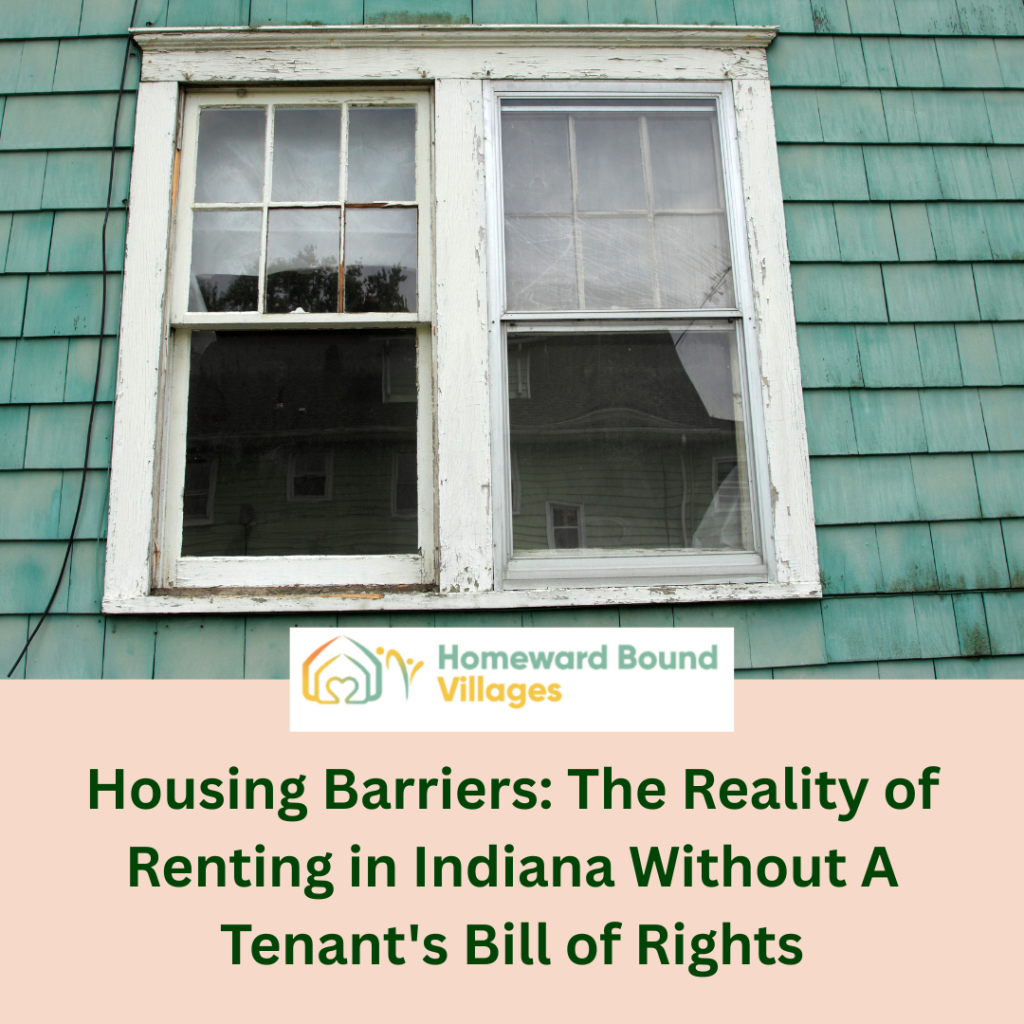
When it comes to tenant protections, Indiana stands out, but not in a good way. Unlike many states, Indiana does not currently have a tenant’s bill of rights. While renters do have some legal protections on the books in the state of Indiana, the reality is more complicated. For low-income renters across our state, knowing your rights and actually being able to enforce them are two very different things.
This is the hidden crisis of Indiana housing: a system where tenants have rights they cannot afford to exercise, and landlords face few consequences for violations. This problem is only more pronounced for those who are low-income renters.
The Rights Indiana Renters Do Have
Despite the absence of a comprehensive tenant bill of rights, Indiana renters are protected by Indiana Code Title 32, Article 31, which establishes several fundamental protections.
Habitability and Repairs
Renters have the right to have their landlords provide safe and decent housing units, including working plumbing, heating, electricity, ventilation, smoke detectors, and sanitary conditions. If landlords don’t make repairs after written notice and a reasonable time period, tenants have the right to sue for damages, orders to repair, and attorney fees.
Privacy and Access
Landlords must provide reasonable advance notice, generally at least 24 hours, before entering a rental property except in emergencies. It’s illegal for landlords to deny tenants access to their rented property by changing locks, barring windows, or removing doors without a court order.
Security Deposits
Landlords must return security deposits within 45 days after the tenancy ends, with an itemized list of any deductions. Landlords cannot deduct for everyday wear and tear, such as carpet cleaning or repainting walls.
Protection from Illegal Eviction
Landlords cannot evict tenants without a court order through self-help methods like lockouts. It’s illegal for landlords to retaliate with raised rent, reduced services, or threatened eviction against tenants who report health and safety violations to government authorities.
Special Protections
Indiana law provides specific rights for tenants who have been victims of domestic violence, sexual violence, or stalking. These protections sound reassuring on paper. The problem is that for many low-income renters, these rights exist more in theory than in practice.
The Barriers: Why Rights Don’t Equal Justice
No Way to Withhold Rent
Here’s where Indiana’s tenant protections begin to fall apart. Indiana is one of only five states (along with Georgia, Idaho, Utah, and North Dakota) without a rent escrow or withholding provision. This means that even if a landlord’s property fails to meet building codes and the tenant provides written notice, the tenant must still pay full rent or risk eviction. Full rent cannot be withheld while waiting for repairs. The tenant must pay the rent in full, even if the rental property is in a state of disrepair or is substandard for basic living conditions. Indiana does not have a law that lets tenants withhold rent or make repairs and deduct it from rent, unlike many other states.
So, what does this look like for an Indiana renter? Well, let’s imagine your heat is not functioning properly in January, or you have mold growing on your walls, or a leaking roof. You’ve notified your landlord. They’ve done nothing. In most states, you could withhold rent or pay for repairs yourself and deduct the cost. In Indiana, you must keep paying full rent while living in uninhabitable conditions, or face eviction.
A Culture of Fear
When eviction is so common in Indiana and affordable housing is so scarce, speaking up becomes dangerous. Many renters fear retaliation from landlords because they have no other housing options, creating what advocates describe as a “culture of fear and toxicity” perpetuated by some landlords who know tenants have limited alternatives.
Limited Legal Recourse
Due to state law forbidding tenants from withholding rent from negligent landlords, renters must keep current with payments even as property owner negligence threatens their housing. Even when authorities try to help, they’re hamstrung by state law.
For extremely low-income renters, this process of recourse is often not possible due to the cost of legal representation. While there are a few legal clinics and those who do take work on a pro-bono basis, it can be difficult to find and engage their services. Meanwhile, as a low-income renter, you will still have to reside in the rental unit while bringing suit against the landlord. With very few protections in place for Indiana renters and an extreme lack of affordable housing, very few low-income renters actually proceed with legal action for these reasons.
State Laws That Protect Landlords
Indiana has preemption laws aimed at preventing city and county governments from requiring landlords to conduct annual inspections of rental units. Even local governments that want to protect renters are prohibited from doing so.
The Indiana General Assembly passed a law in 2020 prohibiting cities from regulating relationships between tenants and landlords. The message is clear: tenant protections are not a priority.
Economic Pressures
Indiana now has the third-highest housing cost burden among all Midwest states for the lowest-income residents, with low-income tenants spending 50% or more of their incomes on rent. When you’re spending most of your income to keep a roof over your head, fighting back becomes impossible.
The Bottom Line
Indiana renters do have rights. But rights without enforcement mechanisms are merely suggestions. When you can’t withhold rent for uninhabitable conditions, when eviction is faster than repair, and when speaking up means you risk losing your home. When the state actively prevents local governments from protecting tenants, those rights ring hollow.
The question isn’t whether Indiana renters have rights on paper. The question is: what good are rights if you cannot afford to exercise them? This is reality for so many low-income renters in our state. Until Indiana enacts meaningful tenant protections, including rent escrow laws, stronger enforcement mechanisms, and local government authority to regulate landlords, the promise of tenant rights will remain just that: a promise, unfulfilled.