
If you’ve been following our blog for a while, you’ll know that we often discuss cooperative living. But what exactly does “cooperative living” mean, and what does it bring to our community? We shared earlier this spring that a team from Homeward Bound Villages had the opportunity to tour Bloomington Cooperative Living (BCL), where residents of cooperative homes showed us their homes and explained first-hand what cooperative living is like.
While we were happy to share some of what we learned and saw, we thought it would be more impactful to have a resident who lives in one of BCL’s cooperative houses share her experiences with all of you. We recently had the privilege of speaking with Annalise Cain, a resident of BCL. Her firsthand experience offers valuable insights into how cooperative living works and the benefits it provides.
What is Cooperative Living?
At its core, cooperative living is a housing model where residents share not just physical spaces but also responsibilities, resources, and decision-making. At BCL in Bloomington, many residents rent their bedrooms and share communal living spaces such as kitchens, living rooms, and green spaces. Additionally, they’ll share in household duties such as cooking and cleaning.
Karwick Village will operate very similarly, where residents will rent their private units and many spaces will be shared by all of the residents of the co-op. The beauty of this living situation is the community aspect, which is ideal for some. When we asked Analise what was most intriguing about living in a cooperative home, she said, “There are lots of different ways to have a community,” Annalise explained. “Being in cooperative living makes you a really good communicator… I’ve found a lot of instances where I’ve had very clarifying moments with people about how to communicate.”
The Day-to-Day of Cooperative Living
Shared Responsibilities
In Annalise’s cooperative house, members divide household chores and maintenance. Each person has specific responsibilities, which might include cooking meals, cleaning common areas, or doing house laundry (kitchen towels, and other common items used by the house). These tasks rotate among residents, creating a system where everyone contributes to the community’s functioning.
“Everybody kind of does their own personal laundry, but then we have rags and dish towels and things that the house does. So usually, it’s a chore for someone to do the house laundry,” Annalise shared.
At Karwick Village, each unit will be responsible for their own laundry and the upkeep of their own units, but the residents can make decisions about the shared spaces, such as the community center, community garden, and green spaces, much like Annalise’s cooperative.
Communal Resources
One of the most significant advantages of cooperative living is the pooling of resources. At BCL, members contribute to a grocery fund, enabling them to purchase food in bulk and thereby reduce their individual costs.
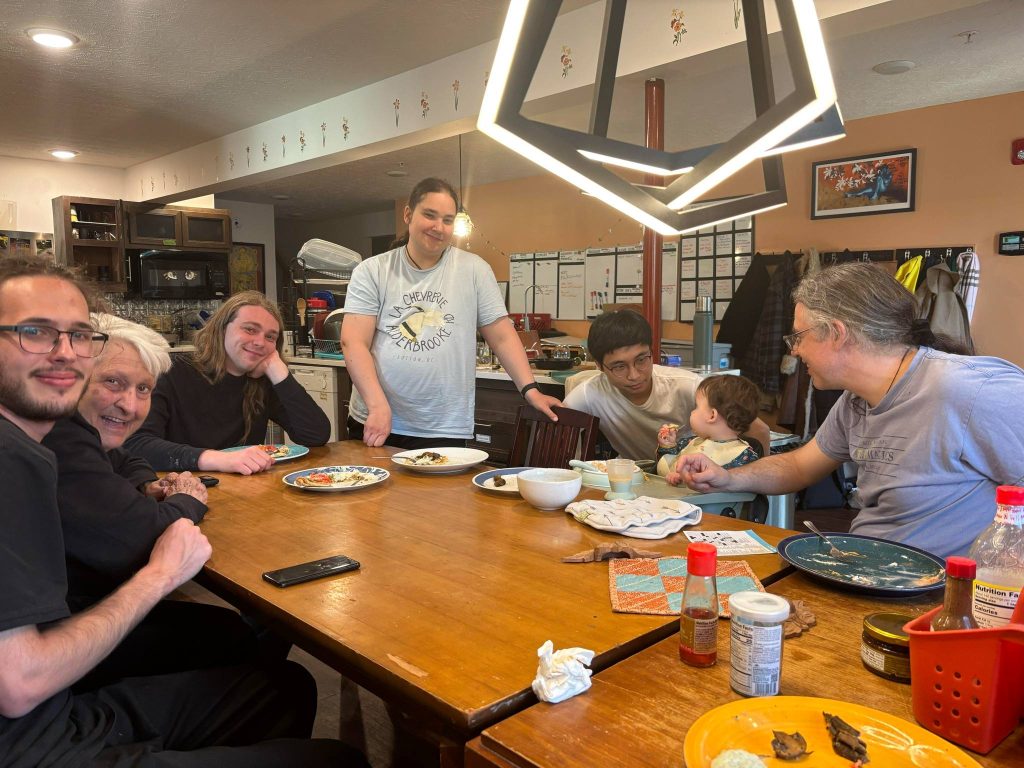
“When you become a member, the cost of living for each month is divided up into the base rent for the room, the utilities, and then the groceries,” Annalise explained. “Everyone is paying into the grocery fund.”
The cooperative also conducts food surveys to understand members’ preferences and dietary needs, ensuring that everyone’s requirements are considered when purchasing groceries. This will look a little different for Karwick Village as well, as each unit features a small kitchen. However, it is our hope that shared community meals will occur from time to time, as the community wishes.
Democratic Governance
Cooperative communities operate through democratic decision-making processes. At BCL, each house holds weekly meetings to discuss internal matters, while representatives from all houses attend monthly General Assembly meetings for organization-wide decisions.
“If there’s like a decision that involves the entire organization, people bring it to GA,” Annalise noted. “The vice president’s role is essentially to run the General Assembly or facilitate the General Assembly.”
This democratic structure ensures that all members have a voice in shaping their living environment and community policies. This is something that we will be bringing to Karwick Village. Each resident will have a say in their community as a board member at Karwick Village. Decisions that impact the entire community are made democratically and collectively.
The Benefits of Cooperative Living
Economic Advantages
Cooperative living can significantly reduce housing costs through shared expenses. By pooling resources for utilities, groceries, and household supplies, members can achieve a higher standard of living at a lower individual cost. This is true in the case of Annalise’s cooperative, where laundry facilities and grocery bills are shared. At Karwick Village, we will also offer shared laundry facilities, a cost-saving feature for our residents. Additional economic advantages at Karwick Village include a shared garden and the opportunity to participate in community activities, such as board game nights or bonfire nights, offering free entertainment at home.
Social Connection
The most profound benefit of cooperative living is the sense of community it fosters. In an era where loneliness has reached epidemic proportions, cooperative living offers built-in social connections. We know that communities build support networks, are typically healthier, happier, and more resilient.
“We’ve started doing welcome parties for people who come in and are new,” Annalise shared. “It can take a little extra work to kind of make something an occasion, but I think it’s really fun.”
From board game nights to movie screenings and even boat parties, cooperative living creates opportunities for meaningful social interaction that might be lacking in traditional housing arrangements.
Karwick Village will have lots of opportunities to create community through shared spaces and share activities as a community.
Flexibility and Inclusivity
Contrary to what some might assume, cooperative living can accommodate both extroverts and introverts. As Annalise pointed out, “I think it actually fits more people than you would think because we have common and private areas.”
She explained that her husband, an introvert, still thrives in the cooperative environment: “He really values his alone time… but he runs the board game nights, and he really loves interacting with people through board games.”
This balance between private and shared spaces allows for both personal autonomy and community engagement.
Changing Perspectives
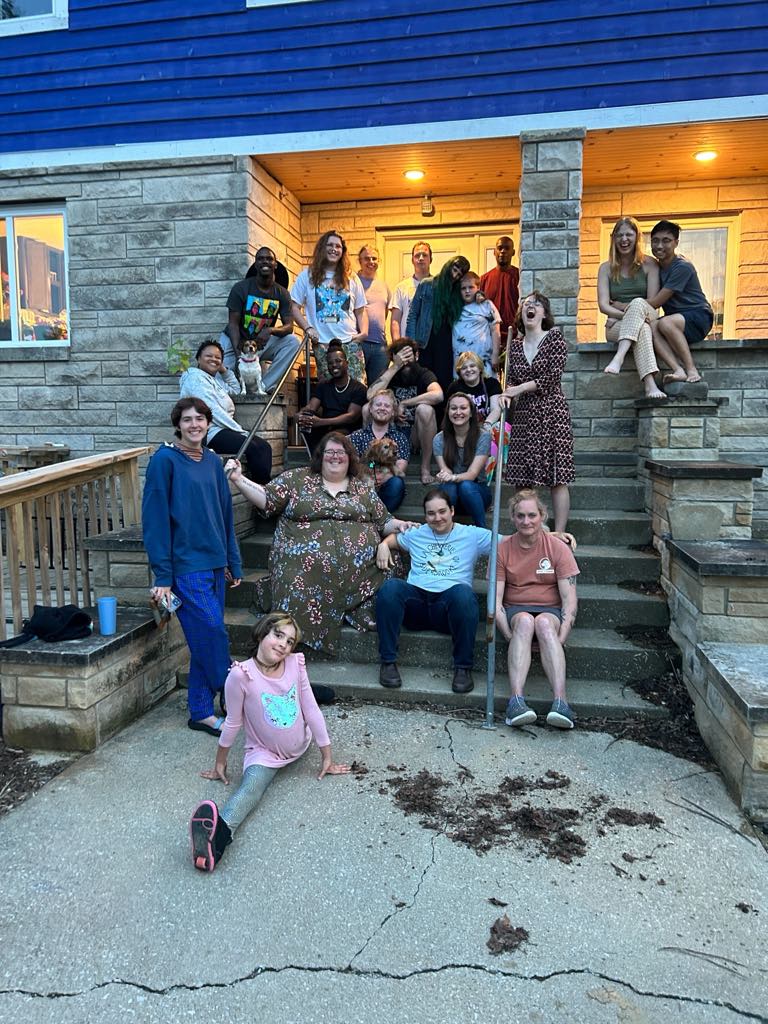
One of the most significant challenges in introducing cooperative living to our community is shifting perspectives on what constitutes community.
As Annalise insightfully noted, “People, I think, aren’t attracted a lot to this kind of living because they’re like ‘these are a bunch of strangers’… but your family are also kind of strangers, and you don’t get to choose your family.”
For those living in cooperative communities, this is not living with strangers, but rather about building chosen communities based on mutual support and shared values.
Looking Forward
As Homeward Bound Villages develops LaPorte County’s first cooperative community with 12 units for one to two-person households, we’re excited to demonstrate how this model can address affordable housing while fostering a sense of belonging and mutual support.
“It can really change how you see community in action,” Annalise reflected. “You can be surprised by what you’re able to give other people and surprised by what other people will give you.”
With housing costs rising rapidly and social isolation, cooperative living presents a promising alternative—one that offers not only affordable shelter but also connection, purpose, and community.
We invite you to join us in reimagining what housing can be in Northwest Indiana. Together, we can build not just homes, but thriving communities where everyone has a place to belong.