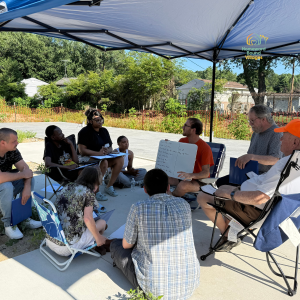

The cost of housing is rising, from homeownership to rentals; these rising costs mean that those with the lowest incomes are being left with impossible choices, or sometimes no choice at all. These cost increases not only mean higher housing costs but also a significant lack of housing stock across the market, especially in the lowest-income brackets. It is well known that affordable housing needs to be built now and in great numbers, but it is also a time to innovate and bring new solutions to the housing affordability crisis. Cooperative Housing is a proven solution with a significant track record of success and is one way we can work towards solving the housing crisis.
A Model with a Long, Successful Track Record
Cooperative housing in the United States is not new. According to the National Cooperative Business Association, more than 1.5 million U.S. families, students, and seniors live in housing cooperatives today. Co-ops have existed in this country for nearly a century, and they have proven resilient through every economic cycle the country has seen.
In New York City, the Urban Homestead Assistance Board has helped reorganize 30,000 units of affordable housing into resident-owned cooperatives, serving predominantly Black and Latino households in some of the city’s lowest-income neighborhoods. In San Francisco, the Columbus United Cooperative provided low-income families a path to ownership in one of the country’s most expensive housing markets, protecting them from real estate speculators. Washington, D.C., is home to one of the largest limited-equity housing cooperatives in the United States. These cooperatives are a mix of owned and rented communities that share a common thread- cooperative governance as a community.
These are decades-old communities providing stable, affordable, resident-controlled housing in places where the market has priced working families out. What Karwick Village is bringing is a proven model to northwest Indiana, where it has never existed before but has been needed.
Why Cooperative Housing Is Different
A standard rental property and a cooperative housing community look similar on the outside, but they function very differently.
In a traditional rental, the landlord owns the property and sets the terms. Rent goes up when the market goes up. Decisions about the building are made by an owner whose interest is return on investment. Residents have very little voice and even less stability, especially at the lowest rungs of the local income ladder. Many landlords know that there is a lack of options for this population, which leaves them vulnerable to exploitation, living in substandard or dangerous housing, or at high risk for being unhoused.
In a cooperative, residents become members of the cooperative that owns or rents the community and governs it. They have a seat at the table, a vote in how the community operates, and a stake in its long-term success. Because the cooperative is structured for stability, with housing costs staying predictable and affordable for the long term. At Karwick Village, that affordability is permanent, not subject to market swings or expiring tax credits.
Cooperative housing gives residents stability, agency, and a sense of belonging, three things that the standard rental market does not reliably provide.
Cooperative Housing Addresses a Problem Bigger Than Rent
Cooperative housing addresses a less-visible crisis reshaping the health of Americans, especially older Americans.
In May 2023, the U.S. Surgeon General issued an advisory titled Our Epidemic of Loneliness and Isolation. The report found that loneliness and social isolation carry health risks comparable to smoking up to 15 cigarettes a day. It also stated that poor social connections raise the risk of premature death by nearly 30% and are associated with higher rates of heart disease, stroke, dementia, depression, and anxiety.
The impact on older adults is especially severe. A National Academies of Sciences review found that social isolation and loneliness in older adults are associated with a 50% increased risk of dementia, a 29% increased risk of coronary artery disease, and a 32% increased risk of stroke.
Where someone lives shapes whether they have neighbors who know their name, places to gather, and reasons to leave the house. Conventional housing is not designed with social connection in mind these days. Cooperative housing is. Shared decision-making, common spaces, regular gatherings, and a built-in reason to know your neighbors are not extras at Karwick Village. They are intentionally the model.
What Cooperative Housing Solves, at a Glance
- Affordability that lasts. Keeping the cost stable keeps monthly housing payments stable and within reach for working families.
- Stability and rootedness. Residents are not at the mercy of a landlord’s decision to sell, raise rent, or stop renewing leases.
- Voice and agency. Residents govern the community they live in, building skills and confidence that extend into the rest of their lives.
- Social connection by design. The cooperative model creates the conditions for neighbors to know one another, look out for each other, and stay engaged across generations.
- Healthier aging. By countering social isolation, cooperative communities help older adults maintain cognitive and physical health longer.
- Community wealth that stays local. Housing dollars stay in residents’ pockets and in the local economy instead of flowing out to absentee investors.
Why Right Now
Land costs, construction costs, and the math of for-profit development make it challenging to build new housing that working families can actually afford. Cooperative housing offers a way forward that conventional development cannot match. It produces housing that stays affordable forever. It builds the community infrastructure that older adults, working families, and isolated neighbors need. This model treats residents as partners, not just tenants. And it scales: every successful village proves the model and lays the groundwork for the next.
Karwick Village is home to six families today. With the Community Center campaign underway and Phase 2 in motion, the Community Center can serve as a template for cooperative, forever-affordable housing across La Porte County and beyond.
The case for investing in cooperative housing right now is simple. The problem is urgent. The conventional response is not enough. The cooperative model works, has worked for a hundred years, and is working here.
Sources:
• National Cooperative Business Association (NCBA CLUSA): Housing Co-ops
• U.S. Surgeon General’s Advisory: Our Epidemic of Loneliness and Isolation (2023)
• National Academies of Sciences: Social Isolation and Loneliness in Older Adults
• National Low Income Housing Coalition: Out of Reach 2025