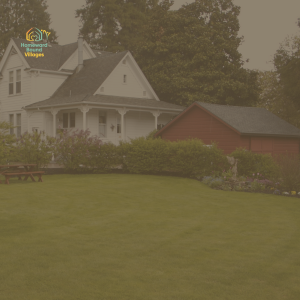
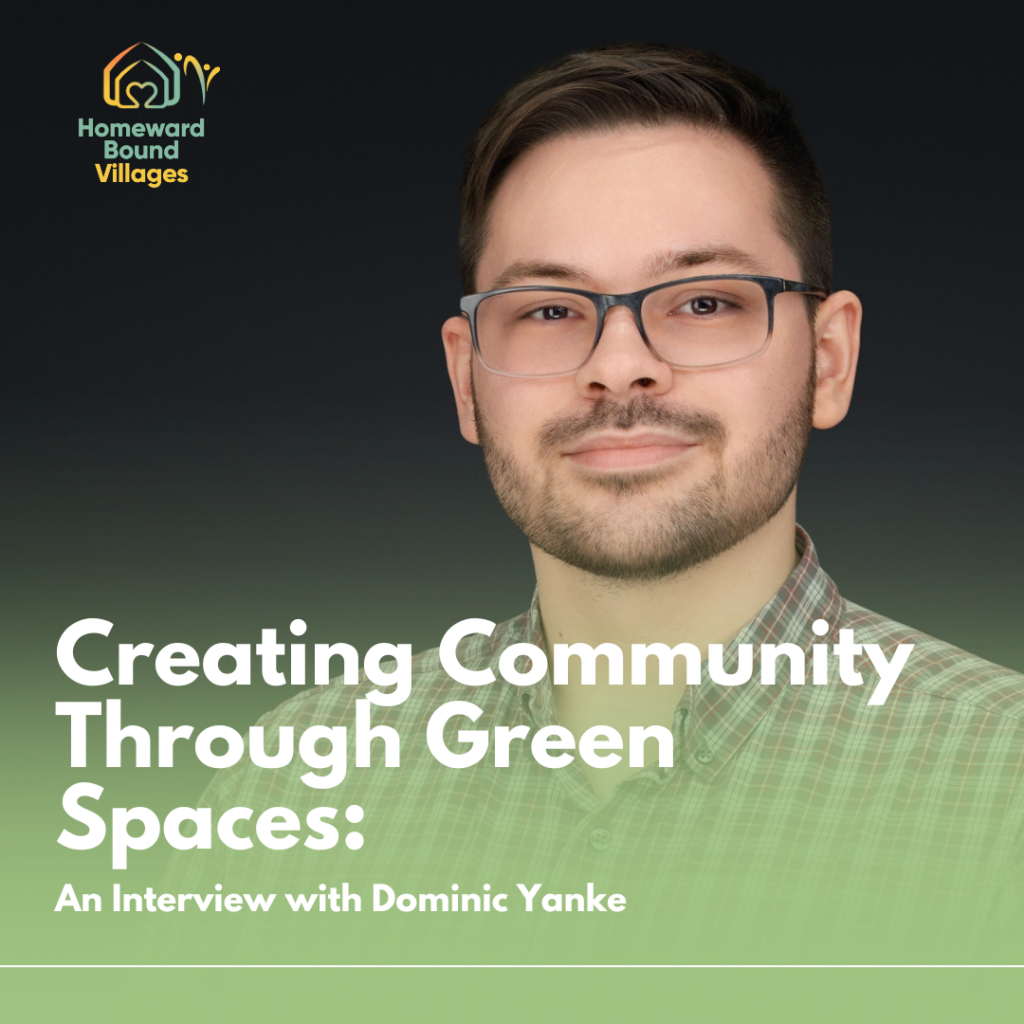
Green spaces in affordable housing communities aren’t just about aesthetics; they’re about health, community building, and environmental stewardship. At Karwick Village, our intentional green space design is seamlessly integrated into the community’s very fabric. We sat down with Dominic Yanke, a biologist and inaugural board member of Karwick Village, to discuss how thoughtful environmental planning can transform not just a property, but the lives of the people who call it home.
Can you tell me a little bit about yourself and how you got involved with Homeward Bound Villages?
“I was born and raised in Michigan City, and after high school, I went to Valparaiso University, where I majored in biology and graduated with a Bachelor of Science, and also majored in Spanish with a Bachelor of Arts. I couldn’t find employment. It’s really tough to get a job in biology around here. So, I decided to pursue a career in nursing.
Throughout my time in college, I spent time at the Tannehill Community Soup Kitchen and eventually joined their board of directors, which is how I started meeting some of the people from Homeward Bound. I saw that the Salvation Army had a position for an overnight attendant at their homeless shelter, and I applied for it and got the job. That’s how I knew Major Becky and Major Dale, as well as Pastor Nancy, from working at the soup kitchen. They were looking for someone for their Karwick Village board who would be a good fit for that, and they both thought of me and reached out asking if I’d be willing to join. I said yes, and that’s how I became part of the Karwick Village board.”
You’re on the inaugural board at Karwick Village, correct? How will that transition as residents move in?
“Yes, as we get residents, the residents will start to replace the inaugural board because it’s really important that they make their own decisions and make their own voice heard in their community.”
Let’s talk about the green spaces at Karwick Village. What can you tell me about what’s planned?
“They have a little trail in the back that goes through like a wetland. And then there will be other green space options, depending on what the residents choose. It could be like a community garden, or it could be like a bioswale. So there are some ditches near the road, and that would be a good place to put in native plants to help with some of that stormwater runoff. And then there are other options throughout the property as the plans are finalized.”
Could you explain what a bioswale is?
“It’s a landscaped area that is kind of in a depression, and it’s got a bunch of native plants, and the entire purpose of it is to slow down the storm water runoff, and it also helps filter out pollutants and sediment and keeps all of that from getting into the river and eventually the lake. So it helps improve water quality and it slows down erosion and all the other damages that too much water flowing fast or building up can cause, especially when you have larger areas that are more pavement and non-permeable surfaces.”
The back corner of the property is wetlands with potential for a trail. As a biologist, what would you like to see there?
“I think for that area back there, just because there’s a little bit of variety in the way the ground is, some of it’s more solid and some of it’s more wetland-like. Part of it could be just the trail, and the other part could be a boardwalk where necessary, depending on what they want and what would be best for making it traversable.
For me, what I’d like to see back there is a species inventory of all the different trees, shrubs, plants, flowers, and grasses that are growing. And from there, once you know what species of plants are growing, you can see which ones are native and which ones are invasive because the native plants will be the best for the insects, the birds, and all the wildlife there.
Also, you can look at those plants, and one of the things that’s starting to become more common now is that people are into foraging. They like to go out into the woods and maybe find mushrooms or wild different leaves or roots of plants and forage for them. I think a lot of the history of foraging in the United States has been lost, and it’s just now coming to be more common, and there are books about foraging out there.
So I am very excited about the different plants that they can find out there and different uses for them with food, and then there’s also indigenous medicinal uses for different plants. So, depending on whether any of the residents are interested in learning about foraging and getting to know the different plants that are back there, that would be interesting, and it’d be a good complement to the community garden aspect of it.”
Do you think residents will vote to take down more trees or plant more trees? What would be your suggestion?
“I’m sure at some point, they’ll decide whether they want to take out more trees or plant more trees. My suggestion would be to always plant more. A lot of people are worried about, oh, the branches might fall on my house, or the roots might be damaging to the pipes underground. But there are ways to select which trees you want, what height they get to, the way their canopy lays out, and how their root system is to avoid those kinds of issues, and then you can start to look at different benefits that they can have, such as the heating and cooling costs.”
Can you elaborate on the heating and cooling benefits?
“So the two different kinds of trees and shrubs are deciduous and coniferous. The deciduous ones are good for keeping the sun off of your house in the summer, and then in the winter, they’ll lose their leaves, and the sunlight will be able to get through to heat up your house. So they’d recommend that you put the deciduous trees on the south side of the house.
And then for coniferous trees, they would provide year-round shade, so you want to consider where to put them differently. And it doesn’t even just have to be coniferous trees—it can be shorter shrubs, too. And what those are good for are blocking the wind and the snow. So in the winter, it’s really the wind that can make the house super cold and drafty, and it just strips the heat right off of the house and makes it more difficult for the furnaces to keep up. So for those, they recommend planting them on the north and northwest side of the house in order to be able to block the northern wind.
Another thing about trees is that wherever you plant them, they find that the air underneath them can be up to 25 degrees cooler than the surrounding area. And they also serve to help with the rainwater, trees, and plants, because when it rains, the water filters all the way down through the leaves, but then a lot of it gets stuck on the leaves, and then when the sun comes out, it evaporates off the leaves.”
Are there other environmental benefits to having trees at Karwick Village?
“A lot of people don’t know this, but when it’s hot out, trees actually kind of like sweat. They release water from the pores on the underside of the leaf. And that water goes into the air and makes the air more humid, and it helps to cool down the air. One of the main reasons that the trees release water like this is that through photosynthesis, they produce water as one of their byproducts.
And they’ll also remove that carbon dioxide from the air, too. Another thing is that their leaves filter out some of the pollutants in the air. If there’s any particulate matter in the air, it can settle onto the leaves of the trees instead of being in the air. Like one time when I was in Lima, Peru, they had all kinds of plants in their city, and I went up to one and I touched a leaf, and it was like there was soot all over it. It was a very dirty leaf from that plant, and that was just because it had been exposed to all the car exhaust and all the air pollutants there, and it just settled onto the leaf.”
What is your greatest hope for the green spaces at Karwick Village five years from now?
“I’m hoping that the residents will decide to have green spaces and make them an intentional part of their living area, and that it’ll help them with a sense of ownership and a sense of accomplishment, too, because they’ll be able to see that they’re growing this stuff with their own hard work.
I know a lot of times people need to see the benefits, whether it’s economic or medical benefits, of things. They’re like, well, what’s in it for me? And while there are a lot of invisible benefits, there are also a lot of visible ones, such as the stress reduction from gardening and being outdoors, and the beneficial impact on mental health. And it’s even been shown that spending time in green spaces lowers your blood pressure.”
Is there anything additional you’d like people to know about Karwick Village or your role on the inaugural board?
“We’re in the planning phase, and we’re going through getting everything set up and organized. We’re making a lot of progress, and things are going well.”
Dominic’s expertise in biology brings invaluable insight to Karwick Village’s environmental planning, but more importantly, his passion for community building through green spaces reflects the cooperative’s core values. From bioswales that protect our waterways to foraging opportunities that connect residents with the land, the green spaces at Karwick Village will be far more than landscaping—they’ll be living laboratories for sustainable community living. As this project moves from planning to reality, the thoughtful integration of nature and housing promises to create not just affordable homes but a thriving, healthy community rooted in environmental stewardship.